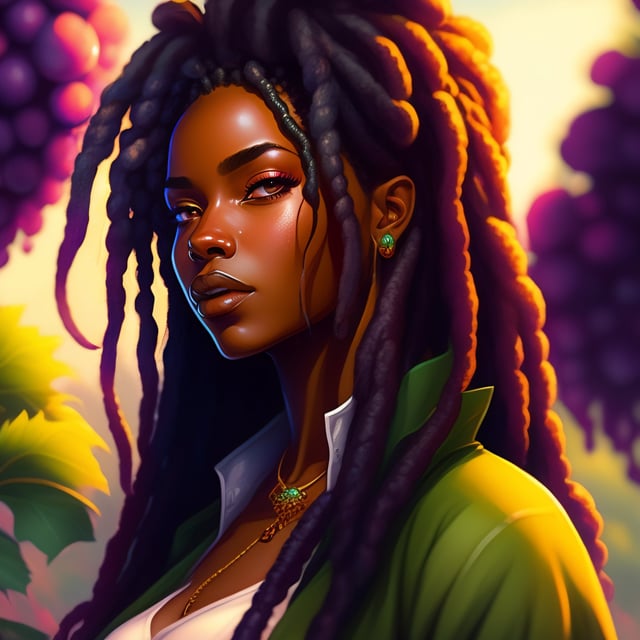
Many a person have gone or will go on a quest; a journey of self-discovery to figure out who they are in this crazy, tragically beautiful world. The topic of individual or collective identity is complex, multi-layered and multifaceted. A kaleidoscope, if you will. There seems to be a new box added to official forms that forces one to define themselves, search the deepest depths of their souls and tick whatever classification suits their personality and unique definition of their sense of self. Figuring out the best non-convoluted way to approach this seemingly larger than life subject matter caused me to really search the great knowledge chasm in my brain box and try to simplify it. It is my hope that the reader goes away questioning the concept of identity; by being inquisitive and curious about how they specify and classify their “worldly,” avatars.
5
Some scholars argue that the formative years are of paramount import. Childhood trauma is not only a therapist’s dreamland to dissect, analyse and explore; it also forms the personality and charred scars that a young adult may hold onto. It may create the lens and perspectives by which they view their environment, nay the world. At the tender age of five, I was concerned about naptime and Saturday morning cartoons. Life was easy breezy. The sun was smiley and shining down all the time, the moonlight was magical and conjured images of a flying carpet. In other news, I definitely considered myself a Disney kiddo, through and through. Recess was my favourite period in school and I loved playing make believe with my best friend- a lovely girl named Selina.
As a young semi-toddler, I identified as a happy child who loved to climb trees, play on the swings and feed her pet rabbits. My world was small and carefree was the order of the day. I was just a girl who loved re-enacting scenes from the animated depiction of The Lion King and pretending to be a Power Ranger (the yellow one, to be more specific), saving the world, taking names and kicking all kinds of arse. Five-year-old Efena was a superhero. She wanted to liberate and empower all the somebodies in the world, even though she had no idea how to say or spell or understand these concepts. Seeing everything through my innocent eyes, in rainbow technicolour, loud and unapologetic – it was my kid-sized utopia. I was curious and clutched onto joy with a youthful ferocity. My world was filled with playful naïveté and specially curated to protect my virtue. Only time will tell if that will remain untouched (spoiler alert – it does not). The biggest takeaway from being pre-adolescent Efena is that a child’s imagination and innocence should be cherished and protected. Being allowed to safely play outside ensured that my natural curiousity was not curtailed. I was taught to be a kind, generous soul which provided a great foundation in forming strong, lasting friendships.
15
At the precocious age of fifteen, I was in my final year of secondary school; a “prison” I loathed and detested with my entire being. My teenage self was sentenced to 6 long-arse years with no chance of early parole despite my many requests to be transferred to a better school (Lagoon, Grange, Dowen College; just to name a few) and to my chagrin, numerous attempts to escape captivity were thwarted at every juncture. Not to sound overdramatic, but this was how I felt at the time. Unfortunately, transferring from a Lagos-based British primary school with an English curriculum to a Nigerian federal government high school was a huge culture shock. A greater one than we imagined or expected. I went from being in a class of 10 to one of 120. From a mixed sex environment to single sex. From having individually dedicated resources to sharing everything with total strangers. From being friends with everyone in my year to not knowing the names and faces of 1,000 girls (just in my year alone). From being in a supportive environment to one of intense hostility, daily instances of some sort of emotional or physical bullying, gross intimidation and concocted schemes by others to take advantage of my nice, generous nature. From playing outside with total abandon to counting down the
minutes so I could avoid all the mean girls.
All my unique, charming qualities that are celebrated now were labelled weird, or soft. I was a coconut, often called an Ajebota or (Yoruba slang for a privileged person) a snob because I used the correct, English pronunciation of words, could write well, aways had a Gap kid backpack and vacationed in Europe during the summer. People who actually knew me, know that the whole upstairs/downstairs vibe was not my thing. I liked being considerate and respectful towards others but it was then, I learnt how truly harmful rumours and judging a book’s cover were; how it shapes other people’s impressions and informs their conclusions before we ever actually interact or have a conversation. In my humble opinion, an all-girl’s school is not only an inaccurate representation of our natural environment and society, but it actually breeds socially inept women that keep the patriarchy very much alive. My first kiss was in a friend’s bedroom at a casual get-together with giggling girls eavesdropping at the door. Soon enough, the rumour mill was churning out false information that I was sensually adventurous.
So, I overcorrected and kept my distance from boys till I was in my 20s. Instead, I had male besties who offered me different perspectives on life and all the chaos associated with living. As Taylor Swift once said there is a special place in the Underworld for women that do not support other women. Girls were so focused on bringing other mademoiselles down by defaming each other’s character and stripping their dignity away.
The older and enlightened me would definitely have taken teenage me to a child psychologist to deal with the trauma scars after surviving such an unforgiving, destructive, narrow-minded atmosphere. For instance, due to some rabid tongue-sucking well into my tween-hood, the dentist suggested I get orthodontic braces which culminated in some very uninspired name-calling like Metalmouth, Jaws (still love the film and musical score to this day) and fielding ignorant questions about whether my teeth were cleaned properly. Emotional terrorism was a tried-and-true weapon of destruction used by many in the most manipulative and exploitative ways.
Fifteen-year-old Efena was quite self-involved and self-deprecating. She was moody and never really felt pretty. Going through puberty was an awkward process but to do it in the face of public scrutiny was not a walk in the park. My petite, curvy figure was an unnecessarily sore spot for others, my smooth skin either bred a feeling of awe or disdain; depending on what side of the bed you woke up on. I was also very into showing off my tiny waist with crop tops. Jiving along to R n B music in the middle of the dance floor was one of my fave things to do. For instance, I taught myself how to belly dance the Shakira and Aaliyah ways. Another thing that baffled me was the unnecessary obsession with skin tones. Obviously, the bleaching of one’s skin stems from a destructive, colonial construct, designed to encourage tribalism, in-fighting and “class” division. The more “European-looking” your facial features are; i.e., lighter skin, straighter nose, thinner lips, the “prettier,” you are considered to be. To this day, bleaching is prevalent in the Nigerian society. The technological advancements have resulted in the development of a wide array of products ranging from uber expensive
creams to sprays to pills.
Projecting false confidence served me well for quite some time but I will be the first to admit, my concerns were very surface level. Many a month was spent worrying and preoccupied with my looks, my 4 pac and Coke bottle figure. I chased popularity and outside reassurance that I was enough. Whether it be attractive enough, smart enough, thin enough, friendly enough…the list goes on. If I could go back, I would not waste all that time petrified that I was never sufficient. To relax and be more present in the moment. Forgive me if I sound like a fortune cookie or something out of a Lifetime movie, but the point I am trying to reinforce is that a person’s worth should be measured by the contents of their character. Martin Luther King was definitely onto something.
25
Turning twenty-five years old was like being blindfolded and dropped in the middle of a minefield, with no suit of armour to protect me from the blast. This was largely in part that I was diagnosed with bipolar disorder 3 years prior. I was prescribed medications to increase my appetite, stabilise my mood, get rid of the insomnia, quieten my mind and add some meat to my undernourished, US size 00 frame. My psychiatrist suggested regular cognitive behavioural therapy as part of my treatment. A hundred per cent of the time, I felt so vulnerable, raw and exposed. My emotions were all over the place. So much so, that I would be high strung and talking a mile a minute, and then the next minute, I would burst into tears without warning over the littlest of things. The brain fog was the worst. It took me three weeks to realise Michael Jackson was dead.
My social life centred around my colleagues and burying myself in work to disguise the agony and heartbreak I felt, as I was mourning the sudden, abrupt death of my first (and only) adult relationship. I was sad a lot of the time, trying to figure out how to exist outside of the relationship. My gross mistake was placing my happiness in someone else, as opposed to finding the joy within myself. Without a shadow of a doubt, the two salient lessons that I learnt from being a partner in the aftermath of the breakup was one should never enter a union with the intent to change the other person’s personality or patterns of behaviour. The second thing is loving and liking oneself enough to derive pleasure from your own company. Finding solace within yourself and being totally content with your flaws, perfect imperfections, curves and edges is key to being a more successful (i.e., consistently happy) person. That way, even when your relationship is experiencing a valley, you can wade through it and see a light at the end of the tunnel.
At this age, I had no idea who I was. My mind had betrayed me, after suffering a major psychotic break so I felt lost a lot of the time. Whenever I was in public, my idiosyncrasies (i.e., my symptoms) were labelled crazy or insane. The only logical solution was to disappear from society and focus on getting better physically, emotionally, spiritually and mentally. Knowing who you are and celebrating all the fabulous, unique qualities you possess is vital for consistent happiness. To paraphrase a famous quote – pain may be inevitable but suffering is optional. One has to make a conscious choice to be grateful and glad every day. Of course, you cannot be happy every minute of every day but dwelling in the negative emotional headspace for too long achieves nothing. Concentrating on solutions rather than the problems leaves very little room for much else.
Another thing I had to learn the hard way was that asking for help is a good thing. After I was diagnosed as bipolar, my support network saved my life. In Derek Shepherd’s words, I was drowning and they saved me. Asking others to lend a hand is not weak. Contrary to the rhetoric out there in the blogosphere, there is immense strength in vulnerability. If I had just opened my mouth and asked my village for help, I could have avoided a couple of other psychotic breaks and maybe even an earlier diagnosis of the bipolar disorder. I would have been able to understand my mind better. I would have realised that stress is a trigger and taken steps to control my levels. I would have understood the importance of community support, from my birth and found family.
In any kind of relationship, deriving pleasure is salient but burying your joy in someone else completely is a quicksand trap one should definitely avoid. My breakup plunged me into total despair. For days, I was wailing in a foetal position on the floor, unable to move or eat replaying an idealised version of our greatest hits on repeat. Romantic comedies were a non-starter so horror movies gave me solace. The only song I could listen to without crying was Payphone by Maroon 5. It was years later that I learnt that being alone does not equate to eventual and inevitable loneliness. That relationships have seasons but the person you should rely on always, is yourself. Take yourself out on dates. Trust yourself. No man is an island but it is fine to go on a self-vacation from time to time.
35
Turning thirty-five was very liberating. I realised that who I am and what I like should be celebrated and appreciated. Embracing my flaws and not feeling shameful about the imperfections that make me, uniquely me, came rather naturally. Many a person achieve this level of acceptance at 40, 50 or 60. One fully recognises and accepts their limitations. Embracing your personality traits, the foundation of who you are at the very core frees you from unnecessary feelings of self-pity and self-mortification about those individualities. Living life unapologetically is truly the way to go. You are comfortable within your skin. You establish boundaries and learn to say n-o, without feeling any guilt. You like and love who you are. Obviously, there is always room for evolution of thought, growth and improvement.
Striving to be better, kinder, more thoughtful, a better listener and writer does not negate the level of acceptance. Getting to this place of serenity took a lot of hard work in therapy and delving deeper into my faith and spirituality. As a non-denominational Christian, my faith is paramount. Strengthening my relationship with the Holy Spirit and making Him my North Star, gave me stability and fortitude. It gave me a sense of comfort, as I realised, I could tap into His infinite grace and mercy, any day and anytime. He is my best Friend, a True Companion, and actually keeps the loneliness at bay. I am fully aware I am imperfect but instead of recoiling in embarrassment, I practice self-love and know without a shadow of a doubt, that He loves me unconditionally (agape love).
The other half of my acceptance-equation was finding an excellent, learned therapist. At the end of 2020, I was severely depressed and a glass-empty kind of gal. A sprinkle of paranoia and occasional auditory and visual hallucinations completed the sadness quotient. Through a referral, I found a rehab centre with erudite psychologists and psychiatrists. They deal with mental health and addictions. After an initial two-hour consultation, we decided on weekly trips to the centre for my one-hour therapy sessions. Acknowledging, dissecting, analysing my feelings led me to a place of complete emotional honesty and creating certain coping mechanisms to cut out what I deem to be unnecessary stress. Stress is a trigger that can plunge me into a dark abyss, so eliminating unnecessary stress helps me maintain my sanity, peace of mind and level of supernatural joy.
The winning combo of therapy and faith has allowed me, nay given me permission to understand and appreciate all the different and beautiful facets slash elements of me. My identity and sense of self is complex, strong, kaleidoscopic, interesting and all kinds of awesome. I am my own personal hype man and have so much love for all the multiple facets of Efena. I also have the added bonus of the whole life-is-short perspective after a near death experience. Being overly concerned with how much weight I have lost does not really seem that significant. I am uber hot, no matter what my non-existent bathroom scales say. Writing this series on identity was both revelatory and a fascinating exercise. Knowing who you are can be quite a journey. A personal journey, I think.
To paraphrase John Legend, it is all about being comfortable in one’s skin and fully embracing your perfect imperfections. Being both God- and self-confident shines through and has helped shape my character. At different stages of my life, how I saw myself, went from being totally negative to extremely positive. Whether it is through the lens of other people’s opinions or not, the most important thing is how one feels about oneself. You know your limits and establish healthy boundaries. For me, being emotionally honest is something that allows me to sustain an almost obnoxious level of optimism and supernatural joy. And I mean that, in the most complimentary way. Positive self-talk is a daily practice that I incorporated into my routine and believing these things are true definitely took time. Time, discipline and a lot of hard work. There were no shortcuts but the end result is worth it. Self-love, self-confidence and sustained happiness. Seems worth it to me…
 Wheelchair Girl
Leave a comment